

Lisa Janicke Hinchliffe: ‘We’re in a time of great messiness’
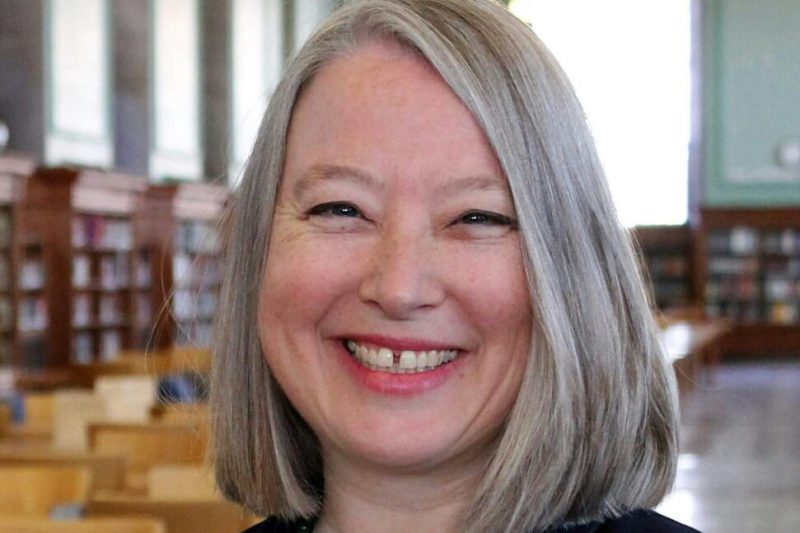
Tim Gillett meets the librarian and educator for the sixth in our Women in Scholarly Communications series
Supported by Cactus Communications

LISTEN TO THE WHOLE INTERVIEW HERE:
For Lisa Janicke Hinchliffe, a career in librarianship began partly with the realisation that she did not want to become a lawyer.
As an undergraduate, she had imagined law might be her future. A job in a law firm during her first year at college helped dispel that idea. At the same time, a work-study position in the library was introducing her to a completely different future.
The catalyst was a librarian early in her own career, Janice Kragness, whose enthusiasm for the profession was infectious. Lisa’s official duties may have involved shelving and filing, but Kragness was determined that her student assistant should understand the wider purpose of a library.
“She really had this notion that the librarian’s role was education, not just being a keeper of the books,” Lisa recalls. “Her emphasis was all on getting those collections into the classroom, getting them into researcher workflows, making sure that people had the skills they needed to use information resources effectively.”
At first, Lisa resisted Kragness’ suggestion that she could make librarianship a career. After about nine months, however, she realised she had found something combining several of her interests: education, service, information and, above all, people.
“I really owe this to Janice,” she says.
That people-centred conception of librarianship would become a thread running through a career spanning more than three decades – one that has taken Lisa from the reference desk to information literacy, academic library leadership, scholarly communications, research integrity and, most recently, her own consultancy.
From the card catalogue to AI
Lisa began her professional career as a reference librarian at Parkland College, an open-enrolment community college in Illinois, before moving through roles at Illinois State University and the University of Illinois Urbana-Champaign.
Those early frontline jobs coincided with a profound technological transition. Returning adult students could find themselves encountering a digital library when their previous experience had involved card catalogues and physical collections.
Helping them make that transition reinforced Lisa’s belief in the educational role of the librarian – and occasionally required improvisation.
In her first year, she was teaching people how to use a web browser at a time when internet connections were far from reliable.
“I even taught about web browsers by drawing one on a whiteboard and pointing at where the different buttons would be if we could see them,” she laughs.
Today the conversation is about Claude, Gemini, Copilot and generative AI, but Lisa argues that the fundamental definition of information literacy has remained surprisingly consistent. She points back to the American Library Association’s 1989 definition: recognising when information is needed, being able to find it, and using it legally and ethically.
What has changed, of course, is what libraries need to do to enable people to achieve that.
The card catalogue gave way to databases and the web; social media demanded new evaluation skills; now AI is creating another set of challenges. Information and media literacy are no longer concerns just for university students or librarians, and Lisa believes libraries’ role as holders and curators of information gives them a particularly important route into developing those skills.
At the University of Illinois, where she joined the library in 2002, Lisa spent more than 20 years as coordinator for information literacy while accumulating a broad portfolio of additional responsibilities. At various points she headed the undergraduate library and university high school library, coordinated staff training and development, and led strategic planning.
Some opportunities arose organically; others she actively pursued. One of the latter came towards the end of her Illinois career, when she moved into research professional development. Librarians at Illinois are faculty: they can earn tenure, hold academic rank and take sabbaticals. Yet their professional master’s degree does not necessarily train them to become researchers.
Lisa saw an opportunity to address that mismatch.
Her aim went beyond simply helping colleagues clear the tenure hurdle. “My real goal was for them to develop their identity and skills as a researcher,” she explains. “Tenure should be, at some level, just a recognition of the kind of research that you’re doing.”
Research, she argues, should drive librarianship and satisfy intellectual curiosity rather than simply fulfil an institutional requirement.
The breadth of her own career reflects the same instinct. “I have a hard time constraining my interests,” she admits. “Maybe that’s also why librarianship turned into a great career for me, because when you’re at the reference desk every person comes to you with a different topic.”
Proving the value of libraries
As president of the Association of College and Research Libraries in 2010-11, Lisa helped launch the Value of Academic Libraries initiative. Fifteen years later, she is clear that demonstrating value remains essential.
Academic libraries have relatively little ability to generate their own revenue, she points out, and depend upon their institutions to invest in them. That makes it essential to connect library activity to the wider goals of the university.
The initiative encouraged libraries to see institutional goals as their “north star” – not abandoning specifically library-focused objectives, but making it possible to draw a clear line between them and outcomes such as student, faculty and researcher success. “Money invested in the library is money invested in the institution’s goals,” she says.
That also means understanding what evidence matters to the people making decisions. Lisa describes the distinction, partly tongue-in-cheek, between “story provosts” and “data provosts”: some leaders respond most powerfully to narratives, others to charts and numbers.
Libraries, publishers – and platforms
Although now a familiar figure across scholarly communications, Lisa says her serious engagement with scholarly publishing came relatively late, around 2018, and grew directly from her interest in information literacy. She became fascinated by the ways researchers used the internet to promote their scholarship and construct their professional identities – including the rapid adoption of ORCID and, particularly, ResearchGate.
ResearchGate presented an intriguing contradiction. Researchers frequently complained about the volume of email it sent them, yet when Lisa suggested deleting their profiles, the response was emphatic: the platform was simply too useful.
“I find that a very interesting juxtaposition,” she says. “Somebody tells you that the value is higher than the annoyance level, even though they are expressing that the annoyance level is extremely high.”
Her conversations with ResearchGate also forced her to confront a question with implications for librarianship: why were libraries so often trying to change researcher behaviour rather than designing services around what researchers actually did?
From there came deeper engagement with scholarly publishing, including writing for The Scholarly Kitchen and Research Information.
Lisa acknowledges that tensions between libraries and publishers remain, and believes some librarian frustration has historical justification. The development of the Big Deal, mass digitisation and the move online in the 1990s left scars that have not entirely disappeared.
But she is hopeful about the future relationship between libraries and publishers.
“Ultimately, we’re trying to serve the same communities of people,” she says. “We probably will never agree on everything. We have a commercial relationship as well, so there’s always going to be some tension there. But I do have hope that we might be able to negotiate that relationship in a way that is to the greater benefit of researchers.”
LISTEN TO THE WHOLE INTERVIEW HERE:
‘The situation’s pretty dire’
Lisa is considerably less sanguine about research integrity. Through her involvement with United2Act Against Paper Mills, she has become increasingly concerned not only about paper mills but about the integrity of the scholarly record itself.
“The situation’s pretty dire,” she says. For publishers whose fundamental proposition is that customers pay for trusted, quality-controlled information, the implications are potentially existential.
“I’m not quite confident that the value proposition is being delivered on,” she says. “There is quite a bit of evidence that, at least for a period of time and maybe still continuing, the scholarly publishing industry has been unable to maintain the kind of information integrity standards that it had been trying to achieve previously.”
AI has intensified the problem by enabling an enormous increase in manuscript production, both legitimate and fraudulent. But Lisa sees technology as only part of the story.
Upstream sits an ethical problem within research itself. Much discussion focuses on incentives to publish, but Lisa argues that incentives cannot be considered without also examining risk. Universities expect academics to publish, she says, but few would argue that this means publishing by any means possible.
“The risk of engaging with a paper mill in order to build your record is clearly not high enough to prevent that from happening.”
That is one reason United2Act has sought greater participation from organisations beyond publishing. By the time a fraudulent manuscript arrives at a publisher, the behaviour that produced it has already taken place.
Publishers nevertheless have a responsibility, she argues, particularly when they present themselves as guardians of the scholarly record: “If you’re not delivering quality, then what are we paying you for?”
There is another structural vulnerability: virtually anybody can establish something that calls itself a scholarly publisher. There is no formal certification or professional guild able to declare that an operation falls outside scholarly publishing. Lisa prefers the term “fraudulent publishers” to “predatory publishers” for organisations deliberately exploiting that gap.
The danger, she believes, is that a gradual deterioration in trust could suddenly become something much larger. “Change happens slowly until it happens all at once,” she says. “I do believe that right now the scholarly publishing industry could experience an ‘all at once’ episode. I’m not wishing it – but I think it could happen.”
Living with the messiness of AI
AI itself is a more complicated story.
Lisa is currently teaching Foresight and Futures Thinking for Library Professionals at Simmons University, and one question explored by futures studies is whether supposedly unexpected “wild cards” really arrive without warning – or whether people simply failed to pay sufficient attention.
AI feels different from earlier technological shifts partly because of its speed. The internet’s effects unfolded relatively gradually; social media spread quickly but did not initially appear to have the same restructuring potential. Generative AI has combined speed with the capacity to reshape established ways of working.
Yet Lisa wonders whether scholarly communications might have been better prepared had more attention been paid to developments in language models and their implications for scholarship. The lesson is to look harder at what is not yet happening. “We need to be looking at those things that aren’t happening yet, especially if they would have the potential to be fully transformational.”
Despite her serious concerns about AI’s role in research integrity, Lisa remains optimistic about its wider potential.
“We’re in a time of great messiness,” she says, “but I have a lot of confidence that people are able to figure out a way through the messiness and create order and logic and codes of practice and ways of being.”
A librarian in the loop
Having retired from the University of Illinois in summer 2026, Lisa has embarked on another chapter with Librarian in the Loop, her new consultancy.
She jokes that a retired academic launching a consultancy may be something of a cliché, but in her case the decision was helped by people already asking to hire her. She describes Librarian in the Loop primarily as a “library relations consultancy”, aimed particularly at scholarly publishers and platforms that want to understand libraries better.
That might mean strategic advice, desk research, interviews or focus groups, or bringing a library perspective into product development. Her longstanding appetite for deciphering policy documents has also led to work around policy development and tracking, particularly for smaller organisations without dedicated government relations expertise. Two months in, she says, she is already “quite busy”.
Outside work, Lisa is involved in her local food and farming community and serves on the board of The Land Connection, a non-profit supporting farmers and helping people who want to enter farming without having inherited a farm.
She loves travelling, while the pandemic also produced another enthusiasm: houseplants. Five plants became around 45, although she admits her collection has occasionally operated according to “survival of the fittest”.
‘Don’t wait for permission’
Asked what she would tell somebody beginning a career in librarianship or scholarly communications today, Lisa’s first piece of advice is straightforward: “Don’t wait for permission.”
People can spend too long waiting to be invited to contribute, she argues, held back by uncertainty or impostor syndrome.
“You can be scared and do it anyway,” she says. “Not all of this has been comfortable.” She remembers the nervousness of publishing her first article in The Scholarly Kitchen, then notorious for a comments section that could be less than forgiving. She published anyway.
Her second recommendation is to find a mentor – although not simply for the sake of having one. The relationship has to click.
And for somebody contemplating a career amid today’s disruption, Lisa sees plenty to be excited about. She is not blind to AI’s risks, nor to the disorder surrounding its introduction. But she can see possibilities that connect directly back to the ideals that first drew her towards librarianship in the early 1990s: using information and technology to help people learn, discover and achieve things.
“I’m not Pollyannaish,” she says. “I think there are going to be real downsides. But I am very excited to see what will come of this next era of using technology as a very personalised agent to help you work on things you want to achieve.”
After a career that began with card catalogues and browsers drawn on whiteboards, perhaps another technological upheaval feels less intimidating than it otherwise might.
There is, Lisa acknowledges, plenty of messiness still to work through. But she is looking forward to finding out what comes next.
Interview by Tim Gillett