

New report explores forces reshaping scholarly communications
DOWNLOAD THE REPORT HERE
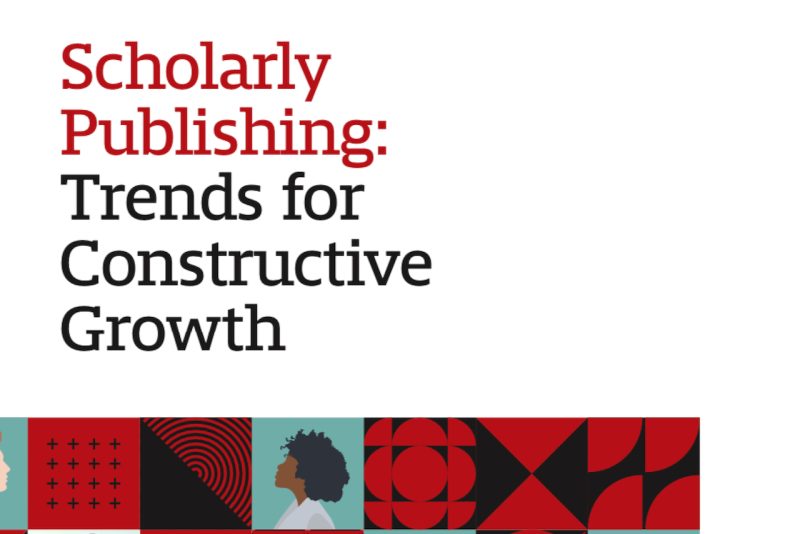
Research Information has launched Trends for Constructive Growth, a report examining the challenges, priorities and opportunities shaping the future of scholarly communications.
Drawing on the views and experiences of professionals from across the research ecosystem, the report explores an industry undergoing significant change – from the rapid development of artificial intelligence and growing concerns around research integrity to pressure on budgets, evolving publishing models and the continuing drive towards more open and equitable research.
Rather than simply identifying the problems facing the sector, Trends for Constructive Growth focuses on where progress can be made and what organisations across scholarly communications can learn from one another.
A recurring theme is trust. As new technologies, business models and ways of evaluating research emerge, maintaining confidence in scholarly communication – among researchers, institutions, publishers, funders and the wider public – is becoming increasingly important.
The report examines some of the major issues expected to influence the sector over the coming years, including artificial intelligence, research integrity, open access and publishing models, research impact and metrics, funding and library budgets, data access and reuse, skills, licensing and the global disparities that continue to affect participation in research.
It also highlights the interconnected nature of many of these challenges. Developments in AI, for example, are creating opportunities for greater efficiency and discovery while simultaneously raising questions about authorship, integrity, peer review and trust. Similarly, the transition towards open research is changing not only publishing models but also the relationships between libraries, publishers, researchers and funders.
The report has been developed as part of Research Information’s wider effort to bring together perspectives from across the scholarly communications community rather than examining the challenges facing individual parts of the sector in isolation.
Tim Gillett, publishing editor, said: “Scholarly communications is changing extraordinarily quickly, but it can sometimes feel as though individual parts of the community are having separate conversations about the same underlying challenges.
“With Trends for Constructive Growth, we wanted to look across the whole ecosystem and ask where the greatest pressures are emerging, where there is genuine optimism and, importantly, where organisations can work together to create something better.
“One of the clearest messages is that trust runs through almost everything – whether we are talking about AI, research integrity, publishing models, metrics or the relationship between researchers and the organisations that support them.”
The report is intended to provide a snapshot of the priorities facing the sector today while helping stimulate discussion about the practical changes that could support its future development.
Gillett added: “This isn’t intended to be a prediction of exactly what scholarly communications will look like in five years’ time. The aim is to provide food for thought and perspectives that will help the community have a more informed conversation about where we go next.”
Trends for Constructive Growth is available now from Research Information.