

Charleston 2026: Research integrity needs clear routes for sharing concerns
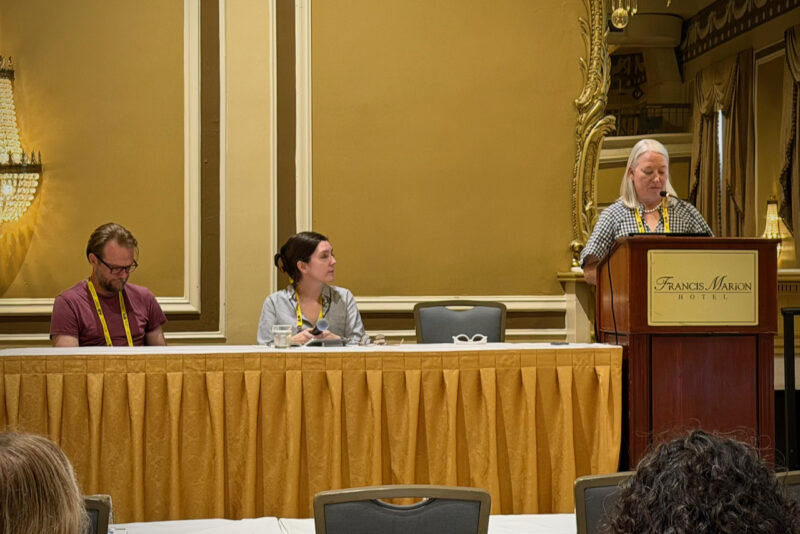
Libraries could play a stronger role in tackling research integrity problems, a lively panel discussion concluded
When publishers identify possible research misconduct, who should they tell? The institution, its library, the researcher – or a combination of all three?
That question framed a Charleston Conference discussion featuring Jessica MacDonald, Senior Publisher at IOP Publishing; Lisa Janicke Hinchliffe, Founder and Principal of Librarian in the Loop; and Joe Shockman, CEO and Co-founder of GroundedAI. This report reflects the discussion without attributing individual contributions.
An opening show of hands suggested broad support for notifying institutions when concerns arise, but less certainty about informing libraries specifically. The ensuing conversation exposed why that distinction matters: knowing about a problem is useful only if the recipient has an appropriate role, sufficient capacity and a process for responding.
A growing burden
The discussion began with the pressure that problematic submissions are placing on publishing workflows. Generative AI allows manuscripts to be produced fast, with convincing language and structure potentially concealing fabricated references, unsupported conclusions or other fundamental weaknesses.
Screening this material requires investment in technology, staff training and editorial checks. Problems that escape detection can burden reviewers and enter the scholarly record, with consequences extending beyond individual journals to public trust in research.
Paper mills add another layer of complexity, enabling researchers to purchase manuscripts rather than undertake the work themselves. Rejecting such submissions protects a journal, but does not necessarily address the behaviour behind them. An author can simply submit elsewhere. Participants therefore questioned whether research integrity was still being treated too narrowly as a publishing problem, when institutions, funders and disciplinary communities also have responsibilities.
A role for libraries?
Libraries’ involvement was discussed from several perspectives. Their expertise in information literacy and research support could help researchers recognise unreliable material, understand responsible AI use and avoid problematic publishing practices.
Aggregated or anonymised information about recurring issues could inform workshops, guidance and institutional conversations without identifying individual researchers.
Libraries also have a financial interest. Through subscriptions, APC funding and publishing agreements, they purchase services whose value depends partly on effective quality assurance. This raised questions about accountability when articles are retracted or journals experience extensive integrity failures. Participants suggested that publishing agreements could provide a mechanism for establishing expectations around transparency, reporting and responses to problems.
However, a distinction emerged between supporting research integrity and investigating alleged misconduct. Librarians cannot be assumed to possess the disciplinary expertise, authority or resources required to assess contested research findings.
Safeguards before disclosure
Sharing information about named researchers prompted particular concern. A mistaken allegation can damage careers, relationships and reputations, while an informal blacklist may offer little opportunity for correction or appeal. The discussion emphasised the need to distinguish suspicions, confirmed findings, public retractions and broader patterns. These categories carry different implications and should not be communicated as though they were interchangeable.
Participants also highlighted privacy, confidentiality and the risks associated with accusatory language. Any reporting process would need careful terminology, appropriate access controls and a clear understanding of who could act on the information.
Existing research integrity offices were identified as important recipients, although institutional responsibilities can be fragmented. An issue involving manipulated images might follow one route, while an authorship dispute could sit with a department or another office.
Libraries could help publishers reach the appropriate institutional contact, but that connecting role should not automatically transfer responsibility for an investigation.
Building workable channels
Capacity was another recurring concern. Additional research integrity duties could become further invisible work for already stretched library teams unless institutions explicitly allocate responsibility and resources.
A useful comparison was drawn with established procedures for handling allegations of excessive resource use. Such processes can specify how evidence is checked, how users are contacted and when concerns are escalated. Research integrity reporting would require similarly deliberate arrangements.
Publisher collaboration, including through the STM Integrity Hub, was presented as progress. However, participants wanted better connections between publishers’ integrity teams, institutional partnership staff, libraries and university offices.
The discussion also identified a wider educational challenge. Learned societies could help articulate disciplinary standards and address behaviours that remain problematic even when a manuscript never reaches publication.
No single reporting model emerged. There was, however, considerable support for beginning with usable information about trends and publicly documented outcomes, while developing more careful channels for individual cases. The central challenge was to turn greater awareness into proportionate action without creating new harms.