

Bloomsbury Open Collections: The Impact So Far
Phoebe Murphy-Dunn showcases the potential sustainability and resilience of collective-action open access models for books
Bloomsbury Open Collections is a collective-action model for funding open access monographs. By asking libraries who would usually purchase our books to put their funds towards this model, we have developed an equitable and inclusive approach to OA for books that does not involve author-side fees and thus makes OA an option for a more diverse range of authors. Bloomsbury was the first commercial publisher to pilot such a model, combining a purchase-to-open framework with exclusive backlist access for participating libraries. As the programme nears the end of its fourth funding year, Bloomsbury Open Collections showcases the potential sustainability and resilience of collective-action open access models for books, even amidst challenging times for libraries.
You can find out more about how the model works on our website and in our previous Research Information piece.
The impact
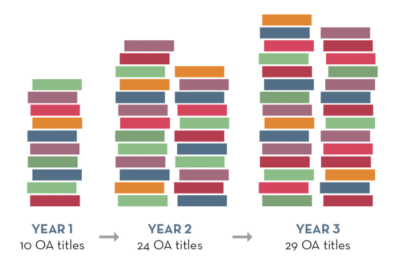
Sustainability and growth: so far in three years, Bloomsbury Open Collections has secured funding to publish 63 titles open access at no cost to the authors. In the pilot year, we published 10 titles OA, then 24 in year 2, and 29 in year three.
Following a successful pilot year, we were able to expand our subject coverage: for the pilot, we offered African Studies and International Development, whereas in years 2-4 we have offered three collections:
- African Studies and International Development
- Gender and Sexuality
- Environment and Climate Change
These interdisciplinary collections capture research in key arts, humanities, and social science topics with urgent, real-world significance; a high proportion of authors who lack access to OA funding; and audiences in regions that are less able to purchase books.
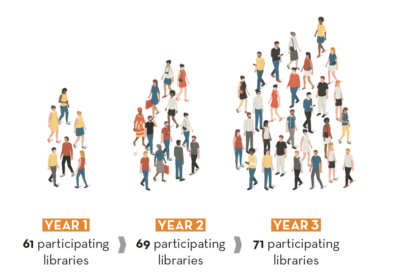
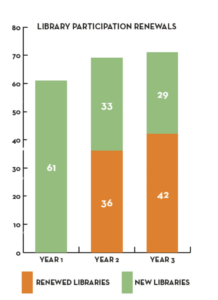
The number of participating libraries has also grown year-on-year. In year 1, we received funding from 61 participating libraries, 69 in year 2, and 71 in year 3. It is worth noting that the increase of two libraries from years 2-3 does not reflect the true degree of increase in funding. Many libraries renewed their participation in the programme in year 3, but expanded their funding to more collections (choosing to fund all three, instead of just one or two, for example).
26 libraries have participated in every year since the pilot.
“Bloomsbury Open Collections meets [our criteria] when selecting open access initiatives to support: the monographs are made open access immediately upon publication, the collections cover subjects that are a priority [for us], and we retain access to the titles whether or not the target funds are met. The Bloomsbury Open Collections criteria for prioritizing underrepresented authors also aligns with our goal of adding publications of underrepresented voices and authors to our collection.”
- University of Alberta Library, Bloomsbury Open Collections participant since our pilot year
Amplifying underrepresented voices
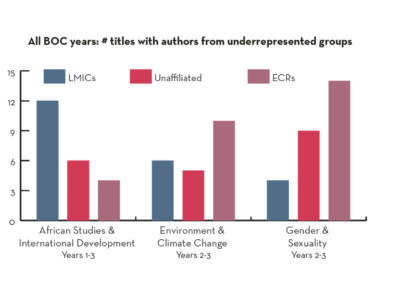
Through Bloomsbury Open Collections, we have opened up important new open access publishing opportunities, prioritising titles and amplifying authors based in low- and middle-income countries, unaffiliated authors, early-career researchers and those who are otherwise underrepresented in scholarly publishing.
Since the programme launched, funding from participating libraries has enabled Bloomsbury to publish:
- 22 titles by authors from low- and lower-middle income countries
- 20 titles by unaffiliated authors
- 28 titles by authors who are early-career researchers
All of these titles have been published open access at no cost to the author.
Of the 63 library-funded OA titles so far, 44 of them have been written or edited by at least one author from an underrepresented group. That is 70% of Bloomsbury Open Collections titles.
“As an African scholar based in South Africa, open access publishing is crucial for increasing my work’s visibility, impact, and reach…However, the costs associated with OA publishing often make it unattainable for many African authors, particularly early to mid-career scholars.”
- Odilile Ayodele, author of Bloomsbury Open Collections pilot title The Political Economy of Mobile Telephony in South Africa
As a result of publishing these titles open access, we have been able to boost the reach of the authors’ research. Bloomsbury Open Collections titles have received 23,500+ downloads so far.*†
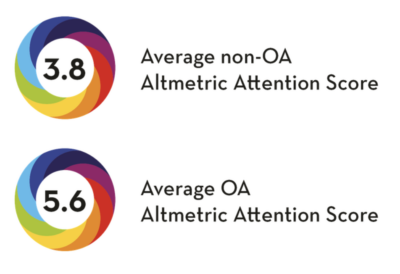
This reach extends beyond usage into mentions and reshares of the research. Open access Bloomsbury Open Collections titles achieve, on average, a 47% higher Altmetric Attention Score than equivalent non-OA Bloomsbury titles.
Since the launch of Bloomsbury Open Collections, OA titles published via the programme have been accessed in 101 countries. The top ten countries of Bloomsbury Open Collections readership include South Africa and Kenya.
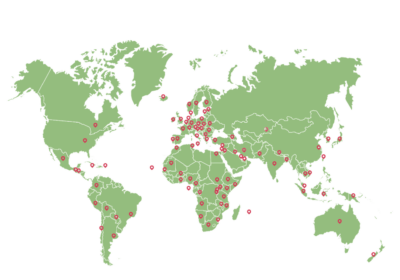
This reach is showcased directly in some of our most highly downloaded Bloomsbury Open Collections titles. Digging deeper into these titles:
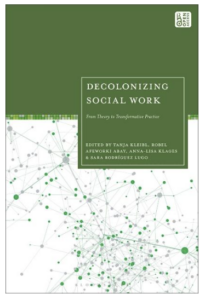
Decolonizing Social Work, a year 1 title, has been accessed from 30 territories so far. The top ten most popular territories for usage include Kazakhstan, Democratic Republic of the Congo, and South Africa.

Antigender Fashion, a year 2 title, has been accessed from 32 territories so far including India, Vietnam, Uganda, Peru, and Indonesia.
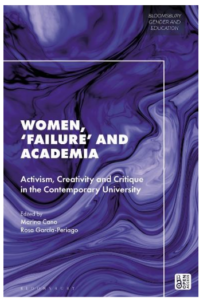
Women, ‘Failure’ and Academia, a year 3 title, has been accessed from 41 territories so far, in just 5 months. Territories include India, South Africa, Jordan, Nigeria, Indonesia, Kenya, and Cambodia.
The Bloomsbury Open Collections project constitutes a welcome intervention that can begin to address the myriad structural access barriers…I hope that other publishers will follow this precedent.
- James B. Stewart, author of Bloomsbury Open Collections pilot title Higher Flight: Refocusing Black/Africana Studies for the 21st Century
Since starting as an open access book publisher in 2008, Bloomsbury’s Academic division has grown to have one the largest open access book portfolios, recently publishing its 750th open-access book. We are committed to adapting our programme as the demand for open access for longform research increases. Through Bloomsbury Open Collections, we have succeeded in enabling open access publishing for a wide range of authors for whom it would not otherwise have been an option, furthering the reach of their research.
How can you get involved?
We are inviting participation from libraries for our fourth year of the programme until the end of November. To find out more about the programme, including how to participate, benefits for libraries and pricing, visit our website. Alternatively, register for Discover Bloomsbury Open Collections, a free webinar on 19 November. We’ll discuss the benefits for libraries, take a deep dive into how the model works and why we’ve chosen this approach, and explore how institutions can participate in shaping the future of open access.
*This data is via our own platform, Bloomsbury Collections, and excludes third party discoverability platforms. All data accurate as of 27 October 2026.
† Data collected from February 2025 onwards only shows roughly one fifth of the actual level of usage due to the implementation of cookie consent on Bloomsbury Collections.
Phoebe Murphy-Dunn is Open Access Marketing Manager at Bloomsbury