

“Reputation, trust, and community”
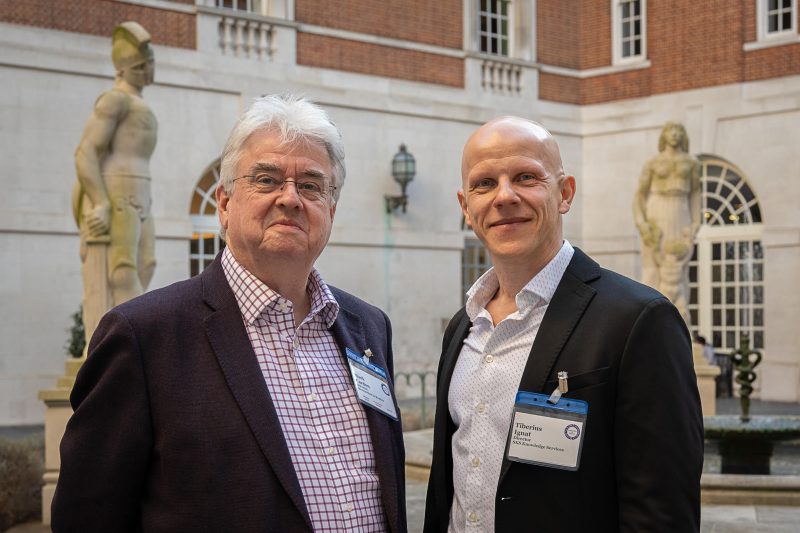
Mark Carden reflects on his 11 years as director of the Researcher to Reader meeting and the importance of conversation
Few events in scholarly communications have worked as hard as Researcher to Reader (R2R) to put publishers, librarians, technologists, intermediaries and researchers in the same room for a genuine exchange of views. That was always the ambition, says Mark Carden, who took a struggling conference inherited from the old subscription-agent world and turned it into one of the sector’s most respected forums.
Now, with R2R entering a new chapter under new ownership, Carden reflects on what he built, his hopes for the event’s future – and why, despite all the rhetoric about openness and innovation, scholarly publishing has in some ways become more complicated.
In this interview with Research Information, Carden discusses the origins of R2R, the costly lessons of Covid-era hybrid events, the difficulties of drawing librarians and researchers into the same conversation, and his conviction that too much debate in scholarly communications is driven by assertion rather than evidence.
R2R has become an established part of the scholarly communications calendar. How did it begin?
In a sense, it began with frustration. Before R2R, there was the ASA conference, which came out of the subscription-agent world. It was trying to be a meeting place for publishers, librarians and agents, but its basic problem was that subscription agents quite understandably wanted to stay friendly with everybody. That meant there was very little real tension, challenge or energy in the room.
I went to one of those conferences years ago, gave a presentation, and hated the event. I said so very bluntly in the feedback. That somehow led to me being drawn into helping fix it, being co-opted as programme chair. We worked hard to make it more engaging, more relevant, and more honest. Then, when the Association of Subscription Agents effectively disappeared after the Swets collapse, I was told the one thing worth preserving was the conference.
I had just started working in recruitment and absolutely didn’t want the distraction of running an event, but I was persuaded. I also thought that if I ran it myself I could at least ensure decent coffee, better logistics and proper name badges. I’ve always been absurdly interested in the attendee experience – how quickly people get served coffee, whether a buffet is laid out sensibly, whether things just work. Those details matter more than conference organisers sometimes realise.
So R2R was designed as a break from the old model?
Very much so. It needed a new identity, so I renamed it R2R as a sort of echo of ASA, but with a new purpose. The idea was to create a forum for all the intermediaries sitting between the author of a paper and the eventual reader – the people and systems that either make scholarly communication work, or get in its way.
That was the core idea: to “un-silo” the conversation and bring together the people who usually talk past one another. I thought, naively, that it might take me 20 days a year and perhaps make £20,000 profit. In reality, the first year took around 150 days of work. But it was well received, and that told me there was a real need for such an event.
Over time, with Ruby Sweeney at The Events Hub handling administration brilliantly, we worked to move the meeting from ‘good’ to ‘great’. Attendance grew, revenue improved, and we were building something with a real identity.
Then Covid hit. How disruptive was that?
Catastrophic, really. We were still relatively young as a conference, so we didn’t have decades of institutional momentum behind us. And because R2R is fundamentally a meeting – a conversation – I didn’t want to turn it into a broadcast webinar like so many others.
The timing was especially challenging. Our 2020 event took place in London just as people were beginning to murmur about “some virus” in the news. Then the London Book Fair was cancelled, and almost immediately the world shut down. It felt like running off a cliff – we had the luxury of 12 months to plan, but it just created higher expectations!
I made what was probably a slightly insane decision to charge full price for the first online edition. My argument was that it would be every bit as good in intellectual value, and delegates were saving travel costs. People who knew and trusted R2R accepted that. People who didn’t know us – or their finance departments – often did not; many still thought online events should be free, or almost free at least!
Sponsors were sceptical too – but, in fact, the online event worked remarkably well. The feedback was extremely positive. We made networking and workshops function online, which was the crucial thing. So in one sense we proved it could be done.
But you’ve been quite outspoken about hybrid since then?
Yes, because I got it wrong. I was an evangelist for hybrid, I thought it was the future, and I said so publicly – but I was wrong.
We did hybrid properly, and that was the problem: doing it properly is incredibly hard and incredibly expensive. In plenary sessions, the technology could be superb, but only because you had producers, camera operators, mixers, green-room support – a whole invisible machine. Workshops were even harder. If half the people are online and half are in the room, you have to work unbelievably hard to make everyone feel equally present.
Over two years, I probably spent about £40,000 of my own money learning that hybrid doesn’t really work for a conference like ours. On a human level, it is difficult. If you are at home, concentration is hard. If you travel to London and half a panel is on a screen, that can feel unsatisfactory. If you are in a workshop and can’t quite hear the person on the other side of the hybrid divide, the experience suffers.
We got excellent feedback, and some people said it was the best hybrid event they had attended. I’m proud of that. But the honest conclusion is that humans basically want to be physically with one another. For R2R, which lives or dies on genuine interaction, that matters enormously.
What makes R2R different from other industry events?
I think it is one of the very few places where the conversation across stakeholder groups is built into the DNA of the event. Other conferences may include a librarian on a panel full of publishers and then talk grandly about collaboration. But that is not the same thing.
Charleston is, in essence, a library meeting that publishers attend. UKSG is also library-centred, though publishers play a big role. There is nothing wrong with either of those models. But R2R was deliberately constructed as a shared forum where librarians, publishers, technologists, service providers and, ideally, researchers are all participants in the same conversation.
The challenge is that researchers and librarians do not always want to come. Researchers are often not very interested in the mechanics of scholarly publishing. Librarians are busy, selective, and short of money. We have tried free places and other incentives, but it remains hard to get them into the room in significant numbers. When they do come, they often say: “This is exactly the conversation we should be having.” My response is usually: yes, and we’ve been trying to have it for years!
Has R2R shaped your view of the wider sector?
Absolutely. One of my deepest frustrations is how little meaningful listening goes on. Scholarly communications is full of people making sweeping claims without understanding the operational realities of publishing, or the actual practices of researchers.
I get particularly irritated when people declare that all publishing should simply be brought back inside the academy, as though that were self-evidently practical. Publishing is complicated, its economics are complicated, and its workflows are complicated. You can absolutely argue for change, but you cannot responsibly make those arguments without understanding what it is you are proposing to replace.
More broadly, I think we have broken scholarly communications without clearly improving it. We have made it horrendously complicated. We have added new layers of bureaucracy and perverse incentives. We have certainly not eliminated profit, and in some cases we have simply replaced one flawed model with a variety of flawed models that are harder for everyone to navigate.
I find it sad. I think researchers often look back and say: it used to be simpler. You wrote a paper, sent it to a journal, it was accepted or rejected, and the process felt comprehensible. I am not romanticising the old system, which was filled with inequity, moral hazards and excessive profits, but I do think the current system is often a mess.
R2R is now moving into new ownership. Why was this the right moment?
Because I didn’t want it to become the Mark Carden show. I’m in my sixties. My nightmare scenario is becoming the eccentric founder who stays too long and slowly loses touch – so I started a couple of years ago to think seriously about succession.
The reality is that R2R is not a spectacular business, commercially. It is a lot of work for, some years, a modest amount of profit. But it has value in another sense: reputation, trust, community, and the quality of the conversations it produces.
The new owner, Tiberius Ignat, at SKS (Scientific Knowledge Services), feels like a really good fit. SKS is a German company focused on supporting European libraries, open science initiatives, and scholarly communication. There is a pleasing full-circle element because they come from the subscription-agent world. But there is also more to them than that: events capability, research activity, sector knowledge and the right sort of energy. I wanted someone with understanding of our whole community, who combines entrepreneurial drive with organisational capacity, and I think this does that.
I’ll stay involved as an adviser for a period, but the point is for R2R to have a life beyond me.
And what about you, Mark? Retirement? Another venture?
A bit of a handover period first, then perhaps some rest. My garden is an overgrown swamp. And I have several half-written books – a novel, a comic memoir of country living, and a book on selling. My wife is already on her third book, so I need to catch up! I wouldn’t rule out an interesting non-executive director opportunity.
I’m comfortable with the idea that R2R is entering a new phase. The important thing is that it keeps the spirit that made it matter: serious debate, rigorous curation, and genuine conversation between the different stakeholders. Scholarly communications needs more of that.