

The development philosophy behind LeapSpace
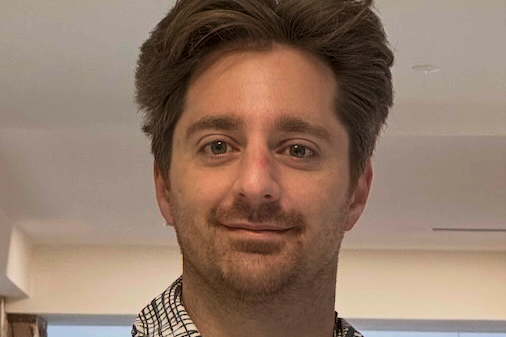
Adrian Raudaschl explores why researchers face growing pressure to prioritise incremental progress over innovation
There’s a chart I keep coming back to. It tracks patents over time, comparing novel combinations of ideas with refinements of existing work[1]. Since the 1970s the novel combinations have been declining, while the refinements have climbed steadily. A 2023 study of 45 million papers and 3.9 million patents found the same pattern in science: work is becoming measurably less disruptive over time[2]. Researchers are working as hard as ever; the system rewards playing it safe, because the bigger bets feel too risky, too costly and too uncertain.
That chart is the reason LeapSpace exists. We want to help reverse it by reducing the effort and the risk of finding novel ideas, and everything about how we’ve built LeapSpace follows from that.
First, it has to be trusted
When Elsevier surveyed thousands of researchers, 84% said they use AI tools in their work, but only 22% trust the output[3]. A tool that hands back a confident, fluent answer without showing its reasoning doesn’t reduce your burden. It adds to it, because now you have to check everything yourself.
I trained as a doctor in Glasgow, where evidence-based medicine was drilled into me early: you don’t believe a claim because someone stated it confidently. You check the source, weigh the strength of the evidence, and ask what could be wrong. A randomised controlled trial isn’t treated the same as expert opinion. That’s the discipline we built into LeapSpace. Every citation opens a Trust Card showing the passage that supports the claim, and where other sources disagree, so you can check it yourself and ask: do I actually believe this? Is it strong enough to act on?
Transparency is necessary, but I’ve come to think it isn’t enough. The real trust trap isn’t trusting the machine too much; it’s losing the confidence to disagree with it. That confidence comes from having to stand behind your own work, so we designed LeapSpace to keep the researcher’s name on it. LeapSpace’s Writing Coach, for example, won’t write the paper for you. It questions your claims, raises angles you haven’t considered, and every change it suggests needs your approval. The question it keeps handing back is one I first learned the weekend my name went on a patient’s chart: would I stand behind this?
Second, it has to widen what you see
The raw material for breakthroughs is often already in the literature, just disconnected. In 1987 a team in Japan noticed strange repeating sequences in bacterial DNA. The paper was barely cited for years, until two biochemists realised the sequences could be turned into a way to edit genes. That became CRISPR, and a Nobel Prize. The pieces existed, published and available, in literatures that weren’t talking to each other.
That’s what LeapSpace is designed to do at scale: explore across fields and surface connections a researcher working within one discipline might never stumble on. It’s grounded in Scopus, the world’s largest curated abstract and citation database, and in more than 20 million full-text articles from many publishers: peer-reviewed content, not the open web. That foundation is what makes the connections worth trusting.
Third, it has to help you act
A researcher who finds an unexpected connection still has to decide whether it’s worth pursuing, find collaborators and funding, and carry the idea forward for months, not one afternoon. So LeapSpace doesn’t stop at the insight. It helps you find the experts working in that space and the funding that could support the work, and Projects keeps your papers and conversations together, so today’s insight can grow into tomorrow’s bolder idea.
What success looks like
The measure I care about most isn’t usage. It’s a shift in what researchers feel they can attempt: the PhD student who follows a thread outside their field because it costs an afternoon, not a quarter; the postdoc who takes a risky idea to their PI because they can show the evidence behind it. That takes evidence you can trust and the confidence to push back. Bolder research needs researchers who own their ideas well enough to disagree.
That’s the philosophy behind LeapSpace, Elsevier’s AI-powered research workspace for universities and industry R&D: explore broadly, think critically, own the work, and grow it over time, all grounded in content researchers can verify. AI should help researchers take bigger intellectual risks, not publish longer summaries of other people’s summaries. Not faster research. Bolder research.
Adrian Raudaschl is Senior Director for Product Management, LeapSpace, Elsevier
[1] Strumsky, D. & Lobo, J. Identifying the sources of technological novelty in the process of invention. Research Policy 44, 1445–1461 (2015).
[2] Park, M., Leahey, E. & Funk, R.J. Papers and patents are becoming less disruptive over time. Nature 613, 138–144 (2023).
[3] Elsevier. Researcher of the Future: a Confidence in Research report (2025).