

Guiding Cambridge through publishing’s AI revolution
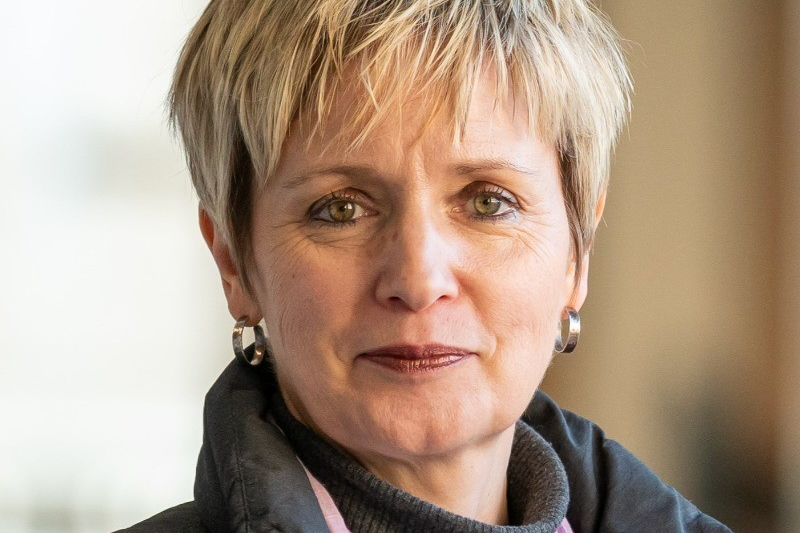
In the first of our Women in Scholarly Communications series, we meet Mandy Hill – managing director at Cambridge University Press
Supported by Cactus Communications

There are few people better placed to reflect on the past, present and future of scholarly publishing than Mandy Hill.
As Managing Director for Academic Publishing at Cambridge University Press, she leads one of the world’s oldest and most influential academic publishers at a moment when the industry is experiencing arguably its greatest transformation since the arrival of the internet.
Artificial intelligence is reshaping how researchers discover information, open access continues to challenge established business models, and the volume of research is growing faster than many organisations can comfortably adapt.
For Mandy, however, change is nothing new.
Over more than 35 years in scholarly publishing, she has seen the transition from paper manuscripts and coloured editing pens to digital workflows, open research and now AI. What has surprised her most is not that publishing keeps changing, but the speed with which it does so.
“When I started, we literally had red, green and black pens on our desks,” she recalls. “If someone sent us a floppy disk, we’d throw it in the bin because we didn’t have computers on our desks.”
Within a few years, that world had disappeared.
“The pace of change has never stopped,” she says. “I certainly didn’t realise when I joined that I was entering a career that would keep reinventing itself.”
LISTEN TO THE WHOLE INTERVIEW HERE:
An accidental beginning
Unlike many senior publishing executives, Mandy never set out to work in scholarly communications. After studying biochemistry, she wanted to return to Oxford, where she had grown up, and searched for jobs that would make use of her scientific background without requiring a PhD.
“It really was serendipity rather than planning,” she says. “I wasn’t looking for a career in publishing. I was looking for a job.”
That first role – at Pergamon Press, shortly after its acquisition by Elsevier – opened the door to an industry she knew almost nothing about. “I had no major attraction towards publishing,” she admits. “But 35-plus years later, it’s worked out pretty well.”
Looking back, she believes two factors kept her in the industry.
The first was the continual challenge: “I’ve probably got quite a low boredom threshold,” she laughs. “If things hadn’t kept changing, I probably wouldn’t still be here.”
The second was discovering the wider purpose of academic publishing. “If I hadn’t grown to love publishing and understand the impact of what we do, I wouldn’t have stayed. Academic publishing genuinely matters.”
That sense of purpose has become central to both her career and her leadership philosophy.
Learning what leadership really means
When asked about the people who shaped her career, Mandy offers an answer that many leaders might avoid – that one of the biggest influences was a bad manager.
“My first boss taught me the impact of poor management and poor behaviour,” she says. “That experience probably shaped me just as much as some of the good managers I’ve had.”
Experiencing destructive and ineffective leadership helped define the kind of leader she wanted to become. Fortunately, she also encountered exceptional mentors.
One in particular, during her early years at Oxford University Press, fundamentally changed her confidence. “I didn’t recognise myself as a leader,” Hill says. “She helped me realise that what I was already doing was leadership and encouraged me to find my own voice.”
It is advice she still values today. Rather than trying to fit a preconceived model of leadership, she believes authenticity creates stronger organisations.
“People often think leadership means becoming someone different,” she says. “Actually, it’s about understanding your own strengths and using them well.” That philosophy extends beyond individual development into the way she runs Cambridge’s academic publishing division.
Although strategy and financial performance occupy much of her time, Hill repeatedly returns to one subject: people. “My role is really about three things,” she explains. “Strategy, budgets and people.”
Those priorities constantly compete for attention, but she argues they cannot be separated: “You can have the best strategy in the world – but, without people who are engaged and have the right skills, it simply won’t happen.”
Leading a centuries-old publisher
Cambridge University Press will celebrate its 500th anniversary in 2034.
For some, heritage could be considered an obstacle to innovation – but Mandy sees precisely the opposite. “We wouldn’t be nearly 500 years old if we’d been a static organisation,” she says.
Instead, she argues, Cambridge has survived precisely because it has continually adapted to changing needs – and that the organisation’s mission provides the constant: “What grounds us is our commitment to researchers and students.”
Rather than seeing commercial success as an end in itself, Mandy believes every strategic decision should begin with a different question: “What do researchers need today?” That, she argues, is the real purpose of a university press: “We’re not here simply to make money. We’re here to support the university’s mission.”
It is a distinction she believes still matters in an increasingly commercial publishing environment. Having previously worked for a commercial publisher, Mandy is careful not to draw simplistic comparisons.
“The big commercial publishers do many things brilliantly,” she says. “They’ve created fantastic products and services. But their primary measure of success is necessarily financial.
“Our measure is different – we’re measured by how successfully we deliver the university’s mission.” That mission-first mindset shapes everything from publishing strategy to investment decisions.
Publishing through uncertainty
Every generation of publishing leaders believes it is living through extraordinary change. Hill believes this time may genuinely be different.
Artificial intelligence, she argues, is not simply another technology to incorporate into existing workflows. It has the potential to redefine the relationship between researchers and information.
“I think AI is fundamentally going to change how our users engage with content.”
That makes this one of the most exciting – and uncertain – periods she has experienced. “It probably fills me with a little bit of excitement and a little bit of dread,” she admits.
The uncertainty, however, does not concern her as much as ensuring that publishers ask the right questions: “What are researchers going to need? How do we protect their interests? What value can publishers add?” For Mandy, those questions matter far more than whether existing business models survive unchanged.
Throughout the interview she returns repeatedly to one theme: mission. “If we remember why academic publishing exists, we’ll make better decisions,” she states – adding that, while the role of publishers may evolve dramatically, their purpose should not.
A changing ecosystem
Mandy believes AI will reshape relationships across scholarly communications, not just within publishing. Researchers are already changing how they work; libraries are rethinking their role; publishers are reassessing products, services and workflows.
“I think all of those relationships will evolve,” she says – but, rather than becoming more adversarial, she hopes the industry becomes more collaborative. “We need open conversations about what we’re all trying to achieve.”
That collaboration, she believes, will become increasingly important as the sector grapples with issues such as research assessment, sustainability and open access.
One frustration remains the incentives that drive researchers’ publishing behaviour; too much emphasis, she argues, still falls on producing ever greater numbers of traditional journal articles. “It isn’t financially sustainable, and it isn’t necessarily the best way to maximise research impact. Everyone recognises the problem.”
But finding the solution is harder: “We can’t all keep waiting for somebody else to make the first move.”
Gender progress ‘incomplete’
As this interview forms part of Research Information’s Women in Scholarly Communications series, Mandy reflected on how the profession has changed during her career.
Publishing has long employed large numbers of women – but when she started, the senior jobs were almost always held by men.
One early experience remains vivid in Mandy’s memory: walking into an editorial board meeting, she was greeted with the words: “Ah, tea has arrived. The assumption was that the young woman entering the room – actually, they probably referred to me as a girl – must be there to serve refreshments. It took me years to get over that,” she says.
Although the comment motivated her, it also undermined her confidence for years afterwards: “I may have carried a bit of a chip on my shoulder.”
Today’s workplace is unquestionably different – there is much less overt sexism than there used to be.
Yet Mandy is clear that progress is incomplete: gender pay gaps remain, sexual harassment has not disappeared.
One person who profoundly influenced Mandy was Janet Boullin, her first senior female leader at Oxford University Press – someone who showed her that successful leadership did not require women to imitate traditionally masculine behaviours: “She showed me you could be incredibly effective while still being completely yourself.”
That experience shaped the advice Mandy now offers younger women entering scholarly communications. “Don’t try to become somebody you’re not,” she says, arguing that empathy, listening and authenticity are strengths rather than weaknesses.
LISTEN TO THE WHOLE INTERVIEW HERE:
Finding purpose
Perhaps the most striking aspect of speaking to Mandy is how little she talks about personal achievement. When asked what she is most proud of, she repeatedly redirects attention towards colleagues.
Success, for her, is watching other people flourish.
“The biggest reward now is seeing the pride that everybody else feels when we’ve achieved something.”
Eventually she points to one initiative she feels she genuinely drove herself: helping establish Cambridge’s online education activities and strengthening relationships between the Press and the wider University, particularly Cambridge University Library.
But, even then, she quickly returns to the concept of collective achievement.
That modesty reflects a broader belief about academic publishing itself. Too often, she says, people misunderstand the role publishers play: “When I graduated, I had no idea what academic publishing was. I don’t think my parents ever understood what my job was!”
Yet publishing, she states, sits at the heart of the research process: “Research is only as good as the other people who know about it, and our role is to make sure knowledge reaches the people who can use it.”
That, ultimately, is why she remains optimistic despite everything currently facing the industry. “This sector is full of brilliant people who care passionately about what they do.”
It is that combination of expertise, commitment and shared purpose that gives her confidence the community will navigate AI, changing business models and whatever follows next.
Results and rewards
Away from work, Mandy finds perspective in a much quieter pursuit: gardening. She enjoys cooking too – although she laughs that her husband now takes responsibility for most weekday meals – but gardening offers something unique: “It’s physical, you’re outside, and you can see the results of what you’ve done.”
Asked what advice she would leave for those now entering scholarly publishing, Mandy smiles before offering an answer that neatly captures both her own career and the industry’s future.
“Buckle up for the ride. It’s going to take you to places you don’t expect, but it’s going to be an incredibly rewarding career.”
Interview by Tim Gillett